
The DAS Decision: Technical Support Should Be Part of the Solution
Technical support should not begin when a problem occurs. Regional expertise, clear escalation procedures and access to replacement components should all be considered before a DAS platform is selected. A Distributed Antenna System may be designed and commissioned as part of a defined project, but its operational life continues long after the installation team has left the site.
Throughout that time, mobile network requirements may change, capacity may need to increase, and software or hardware updates may be required. Technical issues can also arise within complex live environments where maintaining connectivity is operationally important. For these reasons, technical support should be evaluated as part of the solution from the outset—not treated as something to consider after deployment.
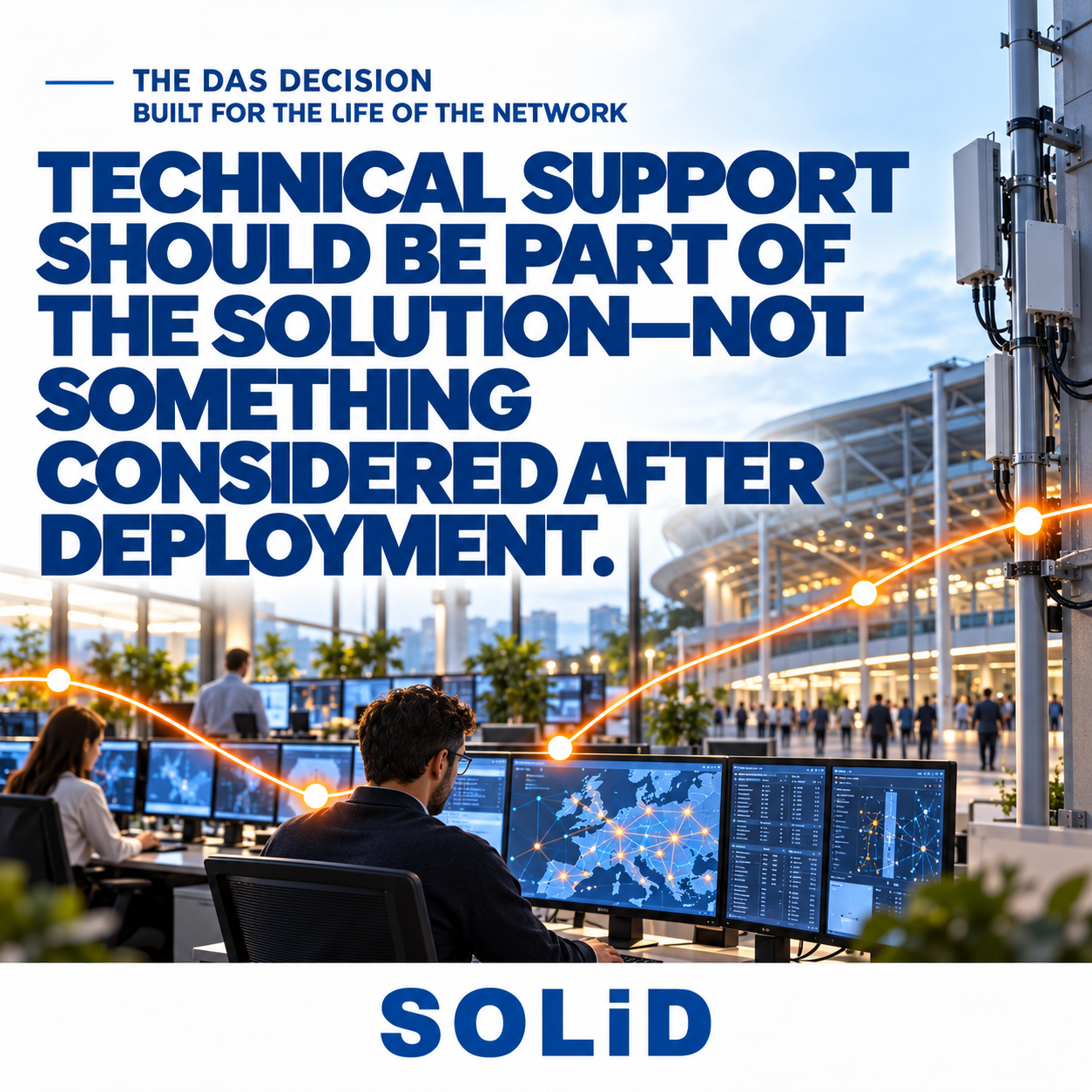
Support begins before commissioning
Effective technical support is not limited to responding when something goes wrong. It begins during the design and deployment stages, when engineering teams work with customers, mobile network operators, system integrators and other project stakeholders to ensure that the proposed solution is suitable for the environment.
Early access to relevant technical expertise can help address system architecture, integration, configuration and performance requirements before the network becomes operational. It also helps create a clearer path from design and installation to commissioning and ongoing support. That continuity is particularly valuable within complex multi-operator deployments and high-capacity environments.
Know where support will come from
Before selecting a DAS platform, buyers should understand who will provide support once the system is operational.
Important questions include:
Where are the relevant engineering and technical-support teams located?
Is expertise available within the region?
How are technical issues reported and escalated?
Who takes responsibility for coordinating a resolution?
What service commitments are provided?
What remote diagnostic capabilities are available?
How are software updates and configuration changes managed?
What arrangements exist for replacement components and local spares?
The answers should be clear before deployment begins. Customers should not have to determine who owns an issue while a live network is being affected.
Access to experienced people matters
DAS installations can support a wide variety of environments, including airports, stadiums, transport networks, healthcare facilities, commercial buildings and major public venues. Each environment presents different technical and operational considerations. Resolving an issue may require more than access to general product information. It can require engineers who understand the platform, its software and the way it has been deployed.
Experienced technical teams can assess the wider system rather than looking at one component in isolation. They can also work more effectively with system integrators, operators and on-site teams when several parties are involved. This level of knowledge is difficult to replace with a generic support process.
Plan for replacement components
Even well-designed infrastructure requires lifecycle planning. Buyers should establish how replacement components will be supplied, whether commonly required parts are held within the region and what lead times may apply. They should also understand the process for repair, replacement and technical assessment.
A local spares model can help reduce delays, but its value depends on the arrangements surrounding it. Clear component availability, logistics and escalation procedures are all important parts of operational resilience.
Support as part of long-term value
The quality of technical support can influence the performance, availability and useful life of a DAS. A lower initial equipment price may appear attractive, but the wider commercial picture should include the availability of engineering expertise, software support, replacement components and a clearly defined escalation route.
These capabilities contribute to the total value of the platform long after the original purchase has been completed. Before selecting a DAS supplier, buyers should consider not only how the network will be designed and installed, but who will continue to stand behind it.
At SOLiD, we believe technical support should be built into the solution—providing customers and partners with greater confidence throughout the operational life of the network.
